

How to Support Your Struggling or Reluctant Reader at Home
Become your child's learning partner.

I love the idea of plants. My mom, dad and brother have green thumbs. They frequently FaceTime each other for gardening advice and to show off their plant babies.
My brother famously picked and ate a habanero in his backyard while he was on the phone with our parents.


On the other hand, I spent my 20s traveling the world and living in apartment rentals. I nurtured a few low maintenance succulents and even a fig tree, but never explored gardening or farming.
In my 30s, I’m growing roots in Northern California. And, my parents want their only grandchild (my son) to have a garden.
This past summer, they planted tomatoes in my small backyard. The vines grew outrageously fast and after just a month my toddler was munching on juicy red cherry tomatoes for breakfast.
I did little to maintain the garden my parents planted, yet reaped all of the benefits.
My favorite part of last summer’s tomato garden was that when my son woke up and walked downstairs he’d walk past the TV and toy cars straight to the tall tomato plants to check if any were ripe and red.
I wondered if I could be a better gardener for my son.
But, I shook off my curiosity about gardening and farming food. There were more pressing things to worry about, like weaning my son off his pacifier and getting him to daycare on time.
In July, my sister-in-law mentioned the importance of growing your own food for survival purposes. In December my brother told me I should pick fruit more often.
In January, I told my toddler that we’d celebrate the Indian holiday “Holi” in March. He was sad that we’d put Christmas decorations away and needed a holiday to look forward to.
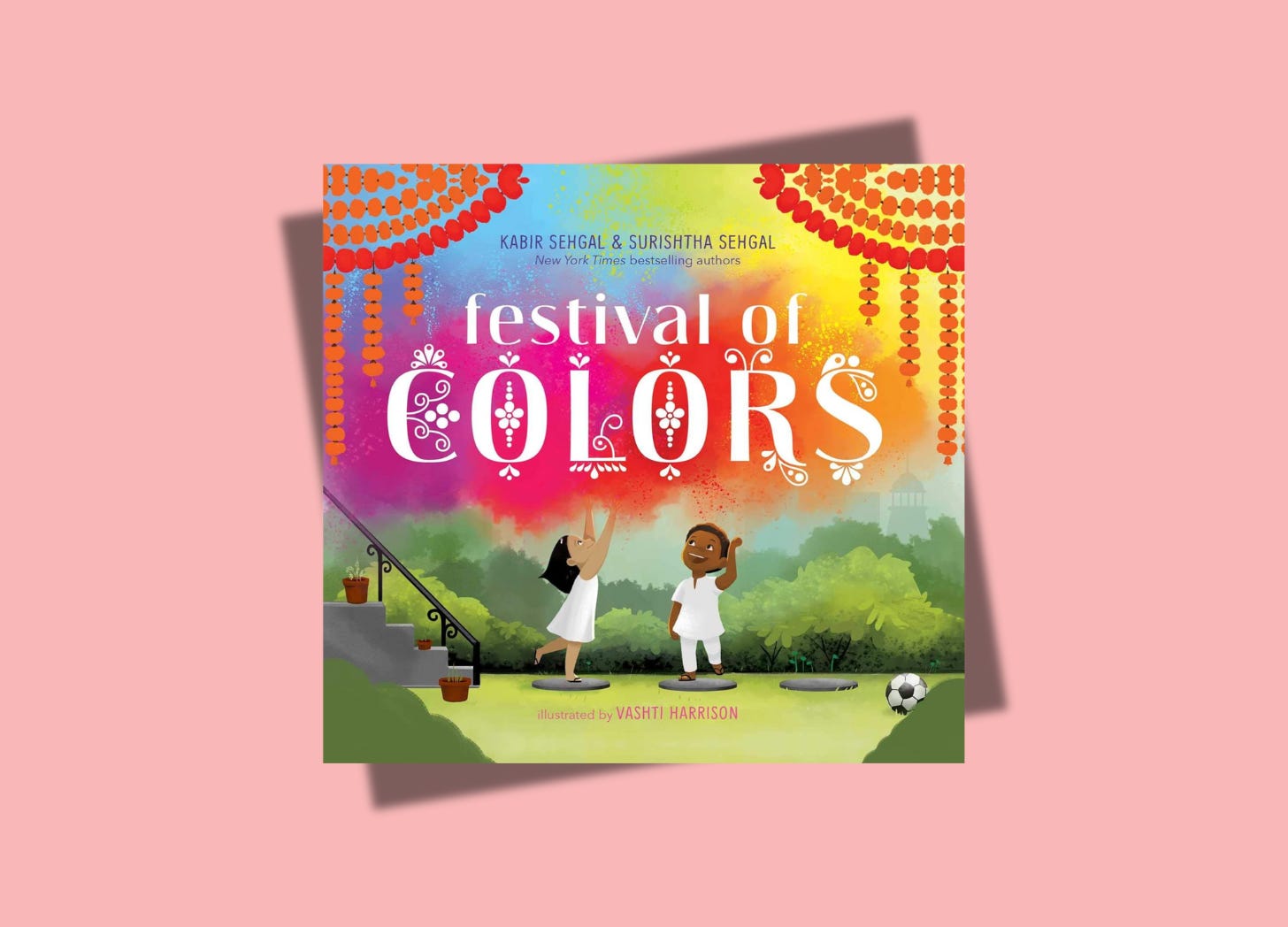
“Holi Hai” he said remembering a book we’d read about the festival last year. He continued, “We’ll make colors out of flowers.”
In the board book Festival of Colors by Kabir Sehgal and Surishtha Sehgal children press dried hibiscus and orchid flowers into colorful powders.
The colored powders used to celebrate holi in 2026 are often made from corn starch, refined flour and synthetic pigments.
Traditionally, the colored powders are made from flowers like hibiscus and indigo, they’re made from root vegetables like beets and turmeric as well.
My son’s excitement about the powder and the board book inspired me to say “let’s go to the nursery and get some seeds. We’ll have plants to make powder out of by March.”
A few questions ran through my head, “Can you plant anything in January? What plants can we use to make colored powder?” and “Do I need to research this?”
I called back a memory from a couple years ago. My friend Sarabeth completely shattered the way I think about farming and gardening.
She sent me a message sharing that she and her kids had gathered seeds for a variety of fruits and flowers and scattered them in soil. She mentioned that it would be fun for them to see what ended up germinating and growing. I was surprised by how casual she was being. She made gardening sound playful, simple and creative.
“Let’s do this” I said to my toddler.
I picked him up from pre-school at noon that afternoon and we headed to Summerwinds Nursery. We bought beet seeds and wildflower seeds. Once we got home, it took us ten minutes to plant the seeds. By 1:00 pm we were eating toaster waffles on the deck.
Similar to sowing seeds, teaching a child the basics of reading can reap benefits even if you do it in a messy and playful way. What’s most important is that you have a basic understanding how how children learn to read and that you show up.
Helping your child catch up to grade level reading might not be as difficult or complicated as you think.
I hope you’re open to a playful, creative and simple solution.
How Children Fall Behind
Jess, Arjun and Max are personas I created based on children who I’ve worked with in the past. The purpose of sharing their stories with you is so that you know you’re not alone, and you feel empowered to start supporting your kids with reading and writing at home. I hope these stories give you insight about what might be happening inside the classroom.
Jess is in first grade and she shows signs of dyslexia. Her school doesn’t begin the IEP process until after first grade, which means she won’t be getting much individualized support in first grade. Once a week her teacher supports her one-on-one. The one-on-one lessons go really well. During the rest of the week Jess copies her peers’ work and often guesses. Whenever her mom tries to read with Jess at home Jess says, “I don’t know” or shuts down because she doesn’t know how to read the books her mom bought for her.
Arjun moved from India to America in pre-school. His peers in American pre-school already know their letters and their letter-sound relationships. The teacher is focused on teaching her students phonics skills like blending sounds into simple words. Arjun struggles to engage during these lessons because he doesn’t have the same foundation as his peers. Arjun’s teacher has noticed the issue. However, due to recent budget cuts her school no longer employs a literacy specialist. His teacher struggles to make enough time to explicitly teach Arjun how to write and recognize all of his letters.
Max was a late talker. When his peers were learning their letters, he was still learning how to pronounce the “r” sound and the “y” sound. He used to met with a speech therapist twice a week. Like Arjun, Max missed out on learning foundational literacy skills in pre-school. Max’s peers in kindergarten are learning to read their first words and he feels lost. Max guesses during reading lessons. Max receives some one-on-one support from a teaching assistant. His mom is advocating for him to get additional support.
Jess, Arjun and Max need a parent, caregiver, teacher, tutor or specialist to help them master the basics of reading. They need someone who is willing to meet them exactly where they are.
It takes time for children to start receiving individualized support at schools. If you’re advocating for your child to get an IEP you know that there will be a string of assessments and meetings before your child begins receiving support. Your child’s school may not even consider IEPs for children until they are in first or second grade.
If you’re the parent of an English Language Learner your child may or may not go to a school with a strong program for ELLs. Even if they are receiving some support at school, you may want to see them make faster progress.
Lastly, maybe your child doesn’t have a learning difficulty and they speak English fluently. Maybe your child’s school is struggling because of large budget cuts and high teacher turnover rates. You notice your child isn’t getting the instruction they need and you don’t want them to become just another statistic.
I want you to know that you can start supporting your kids at home and it might be easier than you think.
Identify the Gaps in Your Child’s Learning
If your child is a struggling reader, it’s important to identify exactly what they need help with first. (Your child’s teacher may be able to help you with this.)
If your child is struggling to read simple words like “cat” and “dad” start by supporting them with foundational phonics skills. Read the posts Teach Your Toddler to Recognize and Write Letters, Teach Your Child to Write Letters (Ages 3+), and Teach Your Child to Read Their First Words. Each of these posts includes nuggets of important information to guide you.
If your child is good at reading simple words, but struggles to read tricky words like “could” and “flow” then you may want to teach them how to read heart words, blends and digraphs. Start here.
If your child can read simple words and tricky words, but reads words slowly, one sound at a time, then they to work on their reading fluency and speed. You’ll need to gather decodable phonics books at home and read them with your child regularly. This post and this one include some book recommendations.
In the future, I’ll be writing simple guides to help you support your kids with more advanced skills.
Take the First Step
Children need to feel safe and connected to be ready to learn.
When you start supporting your child provide plenty of support and don’t put them on the spot.
In my experience, many children become excited to learn how to read when they realize that you’re meeting them at their level rather than asking them to do work that’s too difficult.
The less stressed you are, the less stressed they’ll be!
Let’s connect in the comments.
Rooting for you,
Literacy Specialist Mohini